Pink Noise and Deep Sleep: The Triathlete's Secret Weapon for Recovery?
By Sarah — translated from an article by Charly Caubaut Published on 25/08/2026 at 08h30 Reading time : 7 minutes
When the Night Becomes Your Best Ally: The Quest for Perfect Sleep
Hey there, fellow triathlete! If you're reading this, it's because, like me, you know one thing: training doesn't stop when you rack your bike or take off your running shoes. The most crucial part, the one that turns sweat into progress, happens silently, in the darkness of your bedroom. I'm talking, of course, about recovery. And at the heart of this recovery is sleep. Not just any sleep: deep, restorative sleep, the kind that recharges your batteries to 110%.
We've all had those restless nights before a race, where the slightest creak of the floorboards makes you jump. Or those tough mornings after a big session, feeling like you've run more in your dreams than in reality. For years, I searched for solutions. Nutrition, stretching, meditation... I tried it all. And then, one day, during a conversation with a physical trainer, I heard about a strange concept: "pink noise." At first, I smiled. Another marketing gimmick? But driven by curiosity (and the desperation of a few sleepless nights), I dug deeper. And what I discovered changed my nights, and consequently, my training days.
Today, I want to share this discovery with you. No indigestible scientific jargon, just my field experience, clear explanations, and practical advice so that you, too, might find in pink noise the secret weapon for a champion's recovery. So, ready to optimize your nights?
What Exactly Is This Famous Pink Noise?
Before diving into the heart of the matter, let's get things straight. Pink noise isn't a trendy new playlist. It's a very specific type of sound, and the easiest way to understand it is to compare it to its more famous cousin: white noise.
You've surely heard of white noise. It's the sound of a television with no signal, a constant static. Technically, it contains all the sound frequencies audible to the human ear, with the same intensity. It's effective for masking other noises, but for some, it can be a bit... aggressive. A bit like someone shouting all the notes of music at you at the same time. Not ideal for relaxing!
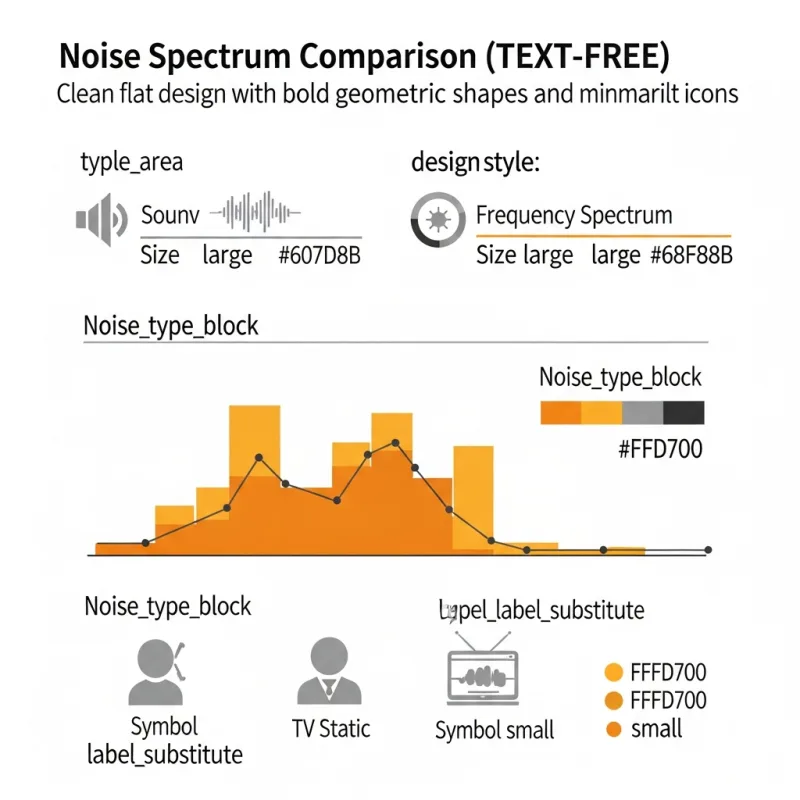
Pink noise, on the other hand, is more subtle, more natural. Imagine the sound of a steady rain falling on a forest, the rustling of leaves in the wind, or a distant waterfall. That's pink noise. The technical difference – and this is a little practical gem – lies in the distribution of energy. In pink noise, the intensity decreases as the frequency increases. In plain terms, the low-pitched sounds (low frequencies) are more powerful than the high-pitched sounds (high frequencies). This distribution is much closer to the sounds we find in nature, which is why our brain perceives it as more balanced, gentler, and less tiring to listen to over time.
A Tale of Frequencies: The Visual Difference
To make it crystal clear, imagine an orchestra. White noise is like every instrument playing at full volume, from the tuba to the piccolo. Pink noise is a better-balanced orchestra, where the double basses and cellos lay a solid and powerful foundation, while the violins and flutes play softer, less prominent melodies. The result is a harmony, a soundscape that envelops you without being aggressive. It's this gentleness that makes all the difference when it comes to falling asleep.
The Direct Link Between Pink Noise and Deep Sleep (The Scientific Gem)
Okay, Charly, that's all well and good, but what does it actually change for my recovery as a triathlete? I'm getting to that. The superpower of pink noise is its ability to influence the quality of our sleep, and more specifically, an essential phase: slow-wave sleep (or SWS for short).
Slow-wave sleep is the holy grail for athletes. It's during this phase that your body goes into "intensive repair" mode:
- Muscle repair: The micro-tears created during training are repaired.
- Hormone secretion: This is the peak production of growth hormone, essential for tissue reconstruction and your body's adaptation to effort.
- Memory consolidation: Your brain sorts through the day's information, solidifying the new technical skills learned at the pool or on the bike.
- Immune system strengthening: Your body builds defenses to fight off infections, a crucial point when you're racking up heavy training loads.
Basically, less deep sleep means less recovery, a higher risk of injury, chronic fatigue, and performance plateaus. And that's where pink noise comes in.
Synchronizing Brain Waves: How Does It Work?
Several studies have looked into this. One of the most cited, conducted by researchers at Northwestern University and published in the journal Frontiers in Human Neuroscience, showed something fascinating. By playing pink noise synchronized with the participants' slow brain waves during sleep, the researchers were able to amplify these waves, thereby extending and improving the quality of deep sleep.
The practical gem to remember is that pink noise acts like a metronome for your brain. It helps it stay longer in this slow, steady rhythm characteristic of deep sleep. In addition to this synchronization effect, it acts as a sound mask. The constant, pleasant background noise of pink noise will drown out disruptive sounds that could wake you or pull you out of a deep sleep cycle: a car door slamming, a neighbor coming home late, the floor creaking... Your arousal threshold increases, and your sleep cycles are less fragmented.
Pink, White, Brown Noise... How to Choose Your Side?
As you've probably gathered, not all noises are created equal when it comes to getting a good night's sleep. While pink noise seems to be an excellent candidate for deep sleep, it's good to know the other options to make an informed choice, because we are all different.
- White Noise: The Raw Mask. As we've seen, it's very effective at blocking out external sounds. Ideal if you live in a noisy city center. However, its "flat" and "aggressive" quality can be off-putting for some in the long run.
- Pink Noise: The Natural Balance. It masks noises well, but with a gentleness that makes it more pleasant for many. Its potential to improve deep sleep makes it a favorite among athletes seeking recovery.
- Brown Noise: The Soothing Depth. Even deeper than pink noise, it resembles the distant rumble of thunder or the sound of a powerful river. Some find it extremely relaxing and enveloping. It's excellent for relaxation and can also help with falling asleep.
There is no absolute truth. The best color of noise is the one that works best for you. I invite you to read this excellent comparison to see more clearly: Brown Noise vs. White Noise: Which One to Choose to Optimize Your Triathlete Sleep?. Experimentation is key. Try the different colors over several nights and pay attention to how you feel upon waking.
My Field Experience: Pink Noise in My Triathlete Routine
Enough theory, let's talk specifics. I remember my first experience very well. I was in the middle of preparing for an Ironman. The training loads were huge, and I was starting to feel a deep-seated fatigue setting in. My nights were short, my sleep restless. I could sleep for 8 hours and still wake up with heavy legs and a foggy mind.
I downloaded a simple app on my phone, found a 10-hour "pink noise" track, and played it, feeling a bit skeptical. I placed the phone on the other side of the room, with the volume very low, just enough to perceive that slight, continuous whoosh, like a breeze in the trees.
The first morning, the difference was subtle. But I noticed that I hadn't woken up a single time during the night, which was rare. After three days, the change was undeniable. I was waking up before my alarm, with a sense of mental clarity and physical freshness I hadn't felt in a long time. My legs seemed to have better "digested" the previous day's bike session. On my long weekend run, my sensations were better, my focus more stable.
It became a ritual. Every night, pink noise accompanies me to sleep. It has become a signal for my brain: "Okay, it's time to switch to repair mode." It's especially valuable when traveling for races. In an unfamiliar hotel room, with its unusual noises, playing this familiar sound helps me recreate a stable and reassuring sleep environment. It's my recovery bubble.
The Practical Guide: How to Integrate Pink Noise into Your Routine
Convinced? Or at least curious to try? Perfect. Here's how to set up your own nightly recovery protocol. It's simple and requires almost no investment.
1. Choose Your Pink Noise Source
You have several options, from the simplest to the most sophisticated:
- Mobile Apps: This is the ideal starting point. Search for "pink noise," "sleep sounds," or "bruit rose" on your app store. Most offer free versions with long-duration tracks. Perfect for testing.
- Streaming Platforms (YouTube, Spotify...): You'll find thousands of hours of pink noise there. Look for videos or tracks that are 8 to 10 hours long so you're not interrupted in the middle of the night when the playback ends.
- White/Pink Noise Machines: These are small, dedicated devices. The advantage is that they don't depend on your phone (no notifications to disturb you, no screen light). The sound is often of higher, uncompressed quality. A good investment if you become a fan.
- Smart Speakers: If you have one, simply ask it to "play pink noise." Easy and effective.
2. The Perfect Setting: Practical Gems for Maximum Effectiveness
It's not just about pressing "play." A few details can make all the difference.
- Volume: Discretion Above All. This is the most common mistake! The goal is not to forcefully cover up noises, but to create an ambiance. The sound should be barely audible. A good rule of thumb: set the volume so it's just below the level of a whisper. If you have to strain to hear it, it's probably the right volume.
- Placement: Create an Ambient Sound. Don't put the sound source right next to your ear. Place your phone or speaker on the other side of the room. The sound will spread more naturally and envelopingly, without assaulting one eardrum more than the other.
- Sound Quality: Avoid Loops. Make sure your audio track is of good quality and, most importantly, that it doesn't have a noticeable "loop." A small click or a change in pattern every 30 seconds can be more disruptive than anything else. Opt for long, seamless tracks.
- No Headphones! Never use earbuds or headphones to sleep with pink noise. It's uncomfortable, can damage your hearing in the long term, and completely isolates you from important sounds (an alarm clock, a fire alarm...).
3. Consistency: The Key to Success
Just like with training, consistency is key. Integrate pink noise into your evening routine, just like brushing your teeth. Start it a few minutes before you go to bed, while you're reading or doing some stretches. Your brain will associate it with sleep, which will help you fall asleep more easily. And most importantly, be patient. Don't expect a miracle on the first night. Give your body a good week to adapt and observe the changes in your energy, feelings, and performance.
Pink Noise: Much More Than a Sleep Aid
While improved sleep is its main benefit, I've found that pink noise can be an ally in other parts of my life as an athlete.
- Concentration and Visualization: Before a race, I sometimes isolate myself for a few minutes with low-volume pink noise in my headphones (for a short duration, it's safe). It helps me clear my mind, block out ambient stress, and focus on my race strategy.
- Office Work: Like many, I have to juggle training and an office job. In a noisy open-plan office, listening to discreet pink noise with headphones helps me stay focused on my tasks without being distracted by surrounding conversations.
It's a versatile tool, a kind of sonic Swiss army knife for mental and physical performance.
So, Ready to Test the Secret Weapon?
The triathlete's journey is a constant quest for optimization. We look for the best gear, the best nutrition, the best training plan. But we too often forget that progress is built on a solid foundation: quality recovery. Pink noise is not a magic potion. It will never replace a healthy lifestyle, a proper diet, or smart training. But it can be that marginal gain, that little "1%" that makes the difference between good and excellent recovery.
It's a simple, accessible, and risk-free tool that can potentially transform your nights into true regeneration sessions. So, why not give it a try? Tonight, download an app, play that sound of a distant waterfall, and listen to what happens. You might just be surprised when you wake up.
Keep riding further!
Answers to Your Questions About Pink Noise
What's the real difference between pink noise and white noise for sleep?
The main difference lies in the balance of frequencies. White noise has equal energy across all frequencies, which can make it sound a bit shrill or aggressive to some. Pink noise has more energy in the lower frequencies (the bass) and less in the higher ones (the treble), making it sound softer, deeper, and closer to natural sounds like rain or wind. Many people find it more relaxing and less tiring to listen to all night.
Do I need a special device to listen to pink noise?
No, not at all to start! A simple smartphone or computer is enough. You can find multi-hour pink noise tracks on platforms like YouTube or Spotify, as well as on many mobile apps dedicated to sleep sounds, often for free. If you become a regular user, a dedicated machine can be a good investment for better sound quality and to avoid tying up your phone.
Is it safe to listen to pink noise all night?
Yes, it's perfectly safe as long as you follow one essential rule: the volume. The sound should be played at a low level, just enough to be perceptible, much like the sound of a quiet fan or a light rain. The goal is not to deafen yourself, but to create a sound backdrop that masks disruptive noises. Never use earbuds or headphones for sleeping, as this could damage your hearing in the long term.
Can pink noise really directly improve my triathlon performance?
Pink noise isn't a magic pill to swim faster or run longer. Its effect is indirect, but potentially very powerful. By improving the quality of your deep sleep, it optimizes your body's natural recovery processes: muscle repair, hormone regulation, motor memory consolidation. A better-rested athlete is an athlete who can train harder, handle larger workloads, and reduce their risk of injury. It is through this mechanism that pink noise can contribute to better performance.