Brown Noise vs White Noise: Which to Choose to Optimize Your Triathlete Sleep?
By Sarah — translated from an article by Charly Caubaut Published on 28/07/2026 at 08h30 Reading time : 7 minutes
Sleep, the Invisible Pillar of Triathlon Performance
Hey friend! If you're like me, you spend hours optimizing your gear, calibrating your training plans, dissecting your nutrition... But there's one area we tend to neglect, and yet it might be the most powerful lever for progress: sleep. You can have the best bike in the world and the sharpest legs, but if the night was short and restless, the next day's race will be an ordeal. I still remember that triathlon where my legs were tingling, but my head was in a complete fog. The cause? A horrible night in a noisy hotel, ruminating over my race strategy. The result: botched transitions and a run that was a struggle from start to finish. A lesson learned the hard way!
Sleep isn't just a break. It's the active reconstruction phase for your body. The magic happens while you sleep:
- Muscle repair: The micro-tears created during training are repaired. It's the famous growth hormone that does the job, and its secretion peaks during deep sleep.
- Energy refueling: Your glycogen stores are replenished, preparing you for the next day's session.
- Hormonal balance: Good sleep regulates cortisol (the stress hormone) and promotes testosterone production, which is essential for muscle adaptation.
- Mental clarity: The brain consolidates learning (swimming technique, pace management) and cleans out metabolic "waste". The next day, you're more focused, more clear-headed to make the right decisions during a race.
In short, you get it, neglecting your sleep is like starting an Ironman with only one water bottle. It's unforgiving. The problem is that between late-night training, the stress of daily life, and pre-race anxiety, getting quality sleep can become a real challenge. This is where surprising allies come in: colored noises. And today, we're putting the two heavyweights of the category in the ring: white noise and brown noise.
Demystifying the Colors of Noise: White, Pink, Brown... What's All This Jargon?
Before diving into the heart of the matter, let's clarify this jargon a bit. When we talk about the "color" of noise, we're not talking about paint, but about the sound spectrum. Imagine a rainbow of frequencies, from the lowest (low frequencies) to the highest (high frequencies). The "color" of a noise depends on how energy is distributed across this rainbow. It's a handy little gem to understand to make the right choice. Alright, I'll give you the rundown.
White Noise: The Classic, but Is It Right for You?
White noise is undoubtedly the best-known. It's the sound you hear from an old TV with no signal, the hum of a fan or an air conditioner. To give you an image, it's a "wall of sound".
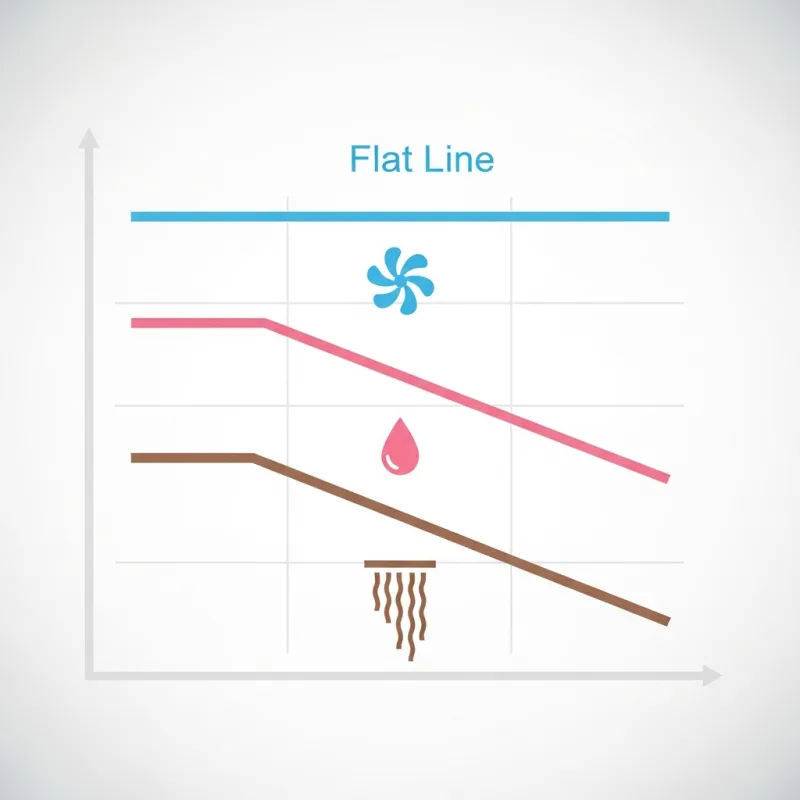
How does it work? White noise is a sound that contains all the frequencies audible to the human ear, with equal intensity (or energy) for each one. It's this density across the entire spectrum that gives it the ability to mask other sounds. Your brain, instead of focusing on the dog barking in the distance or the neighbor's door slamming, "locks on" to this constant, uniform sound. It no longer processes other noises as interruptions but drowns them in this mass of sound.
- Pros: It's incredibly effective at masking sudden, high-pitched noises. It's the bodyguard for your ears.
- Cons: For some people, this abundance of high frequencies can be perceived as harsh, a bit "hissy" or shrill. It can lack the gentleness to truly invite relaxation.
Brown Noise: The New Star of Restorative Nights?
Brown noise (sometimes called red noise) is gaining popularity, and for good reason. It's often described as deeper, fuller, more enveloping. Think of the distant rumble of a thunderstorm, the roar of a large waterfall, or the powerful gust of wind in the mountains.
How does it work? Like white noise, it also contains all frequencies. The big difference is the distribution of energy. Brown noise has much more intensity in the low frequencies (the bass tones), and this intensity decreases sharply as you move up toward the high frequencies (the treble). It's these low frequencies that create that deep, soothing rumble, without the "hissing" quality of white noise.
- Pros: It is perceived as much more natural and calming. Ideal for soothing a restless mind and creating a bubble of serenity.
- Cons: Because it has less energy in the high frequencies, it might be slightly less effective at masking a very high-pitched, sudden noise, like a shrill car alarm.
And What About Pink Noise? (The Bonus Handy Gem)
Just so you have the full picture, there's a middle ground: pink noise. It sits right between white and brown. The energy also decreases in the high frequencies, but less steeply than for brown noise. The result? A sound that resembles steady rain, the rustling of leaves in the wind, or the sound of waves on the beach. Many find it the most balanced and pleasant to listen to over long periods.
Brown Noise vs. White Noise: The Matchup for a Triathlete's Sleep
Okay, now that the introductions are out of the way, let's get down to business. As a triathlete, your sleep needs vary depending on the situation. We'll analyze this together so you can make the best choice.
For Masking Intrusive Noises: Advantage White Noise 🏆
The typical scenario: The night before a major goal race. You're in a hotel room you don't know. The walls are paper-thin. You can hear conversations in the hallway, neighbors flushing toilets, party-goers coming home at 3 a.m.... It's pure anxiety. Your sleep is light, and every little noise startles you awake.
In this situation, white noise is your best friend. Its unforgiving "wall of sound" will create a very effective sound barrier. It will drown out those unpredictable, sharp noises, preventing you from jumping at every sound. It acts as a true shield. For travel, nights in the city, or if you're a very light and reactive sleeper, it's undoubtedly the top performer for the simple reason that it covers the widest range of disruptive frequencies.
For Deep Relaxation and Falling Asleep: Advantage Brown Noise 🥇
The typical scenario: It's Tuesday night, you've just finished a tough interval session on the track or a long bike ride with a lot of climbing. Your body is tired, but your nervous system is still fired up. Your heart is beating a little fast, your thoughts are racing about your performance, the next day's session... You need to "come down," to signal to your body that it's time to switch to repair mode.
Here, brown noise is king. Its deep, enveloping low frequencies have an almost hypnotic effect. They promote the relaxation of the parasympathetic nervous system, the one that manages rest and digestion. This deep, constant sound helps to slow your heart rate and quiet the stream of thoughts. It creates a reassuring sound cocoon that invites you to let go. It's the perfect tool for combating performance anxiety and helping you fall asleep faster after an intense effort.
For Pre-Race Concentration and Visualization: A Draw? 🤔
The typical scenario: A few hours before the start, you're in your bubble. You want to mentally review your race strategy: the swim, the transitions, managing your effort on the bike, your nutrition plan... You need total isolation to concentrate.
Here, the choice is more personal. White noise will be radical for blocking out all external distractions and creating a sound vacuum. If you need total artificial silence, it's a good option. However, brown noise might be more interesting for positive visualization. Its immersive and calming nature can help you enter a state of mental "flow," to visualize your race calmly and confidently, without the slightly harsh edge of white noise. It's up to you to test what best aids your concentration.
My Triathlete's Verdict: So, Which One Do We Choose?
After years of testing different solutions, here is my personal conclusion: there isn't one winner, but a winning duo. I use both, but in different contexts.
- Brown noise is my companion for 90% of my nights. At home, for daily recovery, to calm my mind after long days, it's my number one ally. It has truly changed the quality of my sleep onset.
- White noise is my secret weapon for travel. I always have it on my phone for nights in hotels or in noisy environments. It's my insurance policy to save a potentially disastrous night before a competition.
The most important thing is to understand that there is no universal magic bullet. The best approach is to experiment. What works for me won't necessarily work for you. Your ears, your brain, your sensitivity are unique.
How to Integrate These Sounds into Your Recovery Routine (Handy Tips)
It's all well and good to know this, but how do you do it in practice? It's very simple. Here are a few tips to get you started tonight.
The Tools at Your Disposal
No need to break the bank, you probably already have everything you need:
- Your smartphone: There are dozens of free or paid apps (search for "white noise generator", "sound machine", etc.) that offer huge libraries of sounds: white, pink, brown noise, nature sounds... Most have built-in timers.
- YouTube: A simple search for "brown noise 10 hours" will give you videos to play all night long. Just be aware of ads that can sometimes pop up in the middle.
- Smart speakers: If you have a Google Home or Amazon Alexa, just ask them to play white or brown noise. Easy and effective.
- Dedicated machines: For purists, there are small devices designed just for this. They often generate a higher quality sound, without a noticeable loop, and are very simple to use.
My Personal Protocol: Field-Tested and Approved
If you want to give it a try, here's a simple routine you can adopt:
- Preparation: Integrate listening into your evening routine, 30 to 60 minutes before you want to sleep. This is when you turn off screens, read a bit, do some gentle stretches. By the way, if you want to dig deeper into the subject of sleep routines, I wrote a complete guide on how to optimize your sleep, where you'll find other gems.
- Choosing the sound: Start with brown noise for a normal recovery evening. Save white noise for a night when you anticipate noise.
- The right volume: This is crucial! The sound shouldn't be loud. It should be just present enough to blend into the background of the room. The idea isn't to "cover" the silence, but to create a sonic backdrop. If you listen for it, you should hear it, but if you're not thinking about it, it should be forgettable.
- Duration: Start with a 60 or 90-minute timer. This is often enough to help you fall asleep and get through the first sleep cycles. If you wake up during the night, try letting it run continuously. Test both options to see what works best for you.
Beyond Noise: The Other Pillars of a Champion's Sleep
A word of caution, I want to be clear: colored noises are a fantastic tool, but not a magic solution. They complement solid sleep hygiene, not replace it. For truly rock-solid sleep, never forget the fundamentals:
- Consistency: Try to go to bed and wake up at similar times, even on weekends. Your biological clock loves routine.
- Environment: A cool (around 18°C / 65°F), dark (long live sleep masks and blackout curtains!), and quiet room is the foundation.
- Digital cutoff: Ban screens (TV, smartphone, tablet) at least an hour before bed. Blue light is the sworn enemy of melatonin, the sleep hormone.
- Nutrition: Avoid heavy meals, alcohol, and caffeine in the evening. A light, easily digestible dinner will make it easier to fall asleep.
By combining these good practices with the smart use of white or brown noise, you'll be giving yourself the best possible chance to turn your nights into true recovery factories. And believe me, you'll feel it directly in how you feel during training and in your race times.
So, ready to give it a try? Don't hesitate to experiment, to switch between them, to try pink noise. Find the sound that speaks to you, the one that allows you to disconnect and dive into a deep, restorative sleep. It's one of the simplest and most effective "hacks" I know to boost your progress.
Over to you!
Your questions about colored noises and sleep
Can you become dependent on white or brown noise to sleep?
That's an excellent question. It's more about habit than dependence. If you use it every night, your brain can get used to this sound environment for falling asleep. The risk is finding silence "strange" if you have to sleep without it. My advice is to use it as a tool: essential for travel or restless nights, and optional when conditions are already calm, so you don't create a systematic crutch.
What is the ideal volume for listening to these noises?
The volume should be as low as possible while still being effective. The golden rule is that it should mask annoying noises without being a source of distraction itself. A good test is to set it so it's barely audible, like a background sound that blends into the room's ambiance. A volume that is too high can, in the long run, be harmful to your hearing and disrupt sleep quality.
Is pink noise a good compromise between white and brown?
Absolutely. Pink noise is often considered the best of both worlds. It's less harsh than white noise because it has fewer high frequencies, but it's still more effective than brown noise at masking a wider range of sounds. It's often perceived as very natural (gentle rain, light wind) and is an excellent starting point if you're undecided between the other two.
Can these noises be useful for a recovery nap?
Yes, it's actually a perfect application! A 20-30 minute nap after a big morning session is an incredible recovery booster. Using brown or pink noise during this nap can help you quickly tune out daytime noises and fall into a state of deep relaxation faster, making this short rest much more effective.