The Triathlete's Chronotype: Are You Made for Morning Training?
By Sarah — translated from an article by Charly Caubaut Published on 27/10/2026 at 07h31 Reading time : 10 minutes
The alarm rings at 5:30 a.m. Outside, it's dark. For you, it's the call of the pool, the excitement of a bike ride before the world awakens. Or... it's the start of a fierce battle against sleep, a torture you inflict on yourself in the name of triathlon. Does that sound familiar?
Hello there, triple-sport enthusiast! Charly here. On the circuit, athletes get up at the crack of dawn, decked out in headlamps, with an energy that leaves you speechless. Others, just as strong, struggle every morning but, come evening, can string together miles with disconcerting ease. The popular belief in our community is simple: a "real" triathlete trains early. It's almost a dogma. We admire the one who has finished their swim session before the baker has even turned on her oven. But is this really the only path to performance? Is forcing yourself out of bed when your whole body is screaming "no" the best strategy?
The answer, as you might guess, is much more nuanced. And it lies behind a word that may seem a bit scientific at first, but is the key to unlocking your potential: the chronotype. Forget the preconceived notions and "one-size-fits-all" training plans. Today, we're going on a journey together to discover your internal biological clock. We're going to break down what makes you a morning, evening, or in-between athlete. The goal? To help you build a training regimen that respects your natural rhythm, for more enjoyment, less fatigue, and much better results. So, ready to discover who you really are? Lace up your sneakers, let's go!
The Chronotype: What's This Barbaric Word?
Before diving into the heart of the matter, let's agree on what we're talking about. No, the chronotype isn't a new performance tracking app or the latest GPS watch model. It's much deeper than that; it's literally written into you. It's your natural rhythm, your own temporal signature.
Your Personal Biological Clock
Imagine an ultra-precise clock, nestled in the core of your brain. This is your circadian clock. Over about 24 hours, it regulates a multitude of physiological processes: your sleep-wake cycle, your body temperature, the production of your hormones (like cortisol, the wake-up hormone, or melatonin, the sleep hormone), and even... your peaks in physical and cognitive performance. The chronotype is simply the manifestation of this clock. It determines whether you are naturally programmed to be more alert and efficient in the morning, midday, or evening. It's the reason why your friend is as fresh as a daisy at 6 a.m. to go for a swim, while you, at the same hour, can barely find the bathroom door.
More Than Just a Preference: A Matter of Genetics
And be warned, it's not just a question of "willpower" or habit. If you're a "night owl," it's not out of laziness. Studies, like those conducted by chronobiologist Till Roenneberg, have shown that our chronotype is largely determined by our genetics. It's the expression of our "clock" genes. Of course, external factors like light exposure, work schedules, or family life can slightly shift your rhythm, but the underlying tendency is deeply rooted. Trying to change it radically is a bit like trying to change the color of your eyes. It's often a losing battle, which can lead to what's called "social jetlag": a permanent discrepancy between your internal clock and the demands of society (or your training plan!).
Lark, Owl, or Hummingbird? Discover Your Triathlete Profile
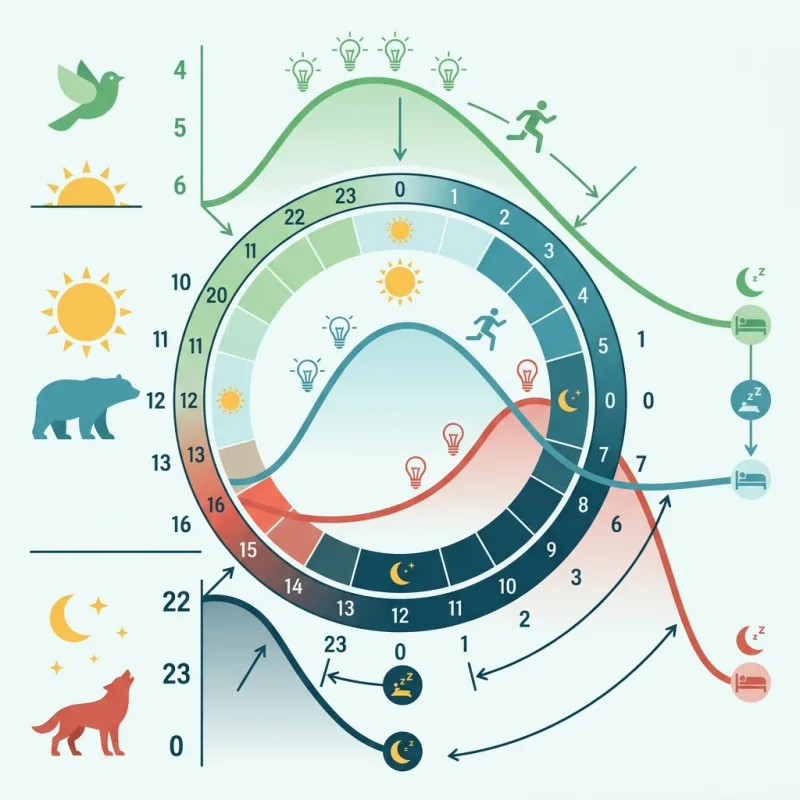
To make things simpler, scientists and coaches often use archetypes. The best known are the Lark (morning) and the Owl (evening). It's a good starting point, but reality is more complex. Let's see where you fit in.
The "Lark" (or Lion) Profile: The King of the Morning
Who are you? You wake up naturally early, often before the alarm even goes off. You're full of energy right from the moment you get out of bed. Your productivity and concentration are at their peak in the morning. On the other hand, in the evening, after 9 p.m., your battery is flat. Watching a movie on the couch is often mission impossible.
Your advantage in triathlon: Early morning slots at the pool? A piece of cake for you. Long bike rides starting at 7 a.m. on Sunday? That's your playground. You can fit in your biggest sessions before most people have had their first coffee, freeing up the rest of your day for work, family, and recovery. Races that start at dawn are perfectly aligned with your natural performance peak.
The "Owl" (or Wolf) Profile: The Evening Athlete
Who are you? Mornings are your worst enemy. You need time (and caffeine) to emerge. Your brain really gets going in the late morning, and you reach your peak physical and mental energy in the late afternoon or early evening. You are often creative and productive after dark.
Your advantage in triathlon: Your strength and endurance are optimal late in the day. This is the ideal time for intense interval sessions on the track or demanding indoor trainer sessions. You can use training to blow off steam after a stressful day at work. You also often have a better ability to recover from these sessions, as your body is at its physiological performance peak.
The "Intermediate" (or Bear) Profile: The Quiet Strength
Who are you? You represent the majority of the population. Your rhythm is aligned with the sun's cycle. You get up without too much difficulty in the morning (after a short warm-up period) and go to bed without any problem in the evening. You don't have extreme peaks or troughs. You are adaptable.
Your advantage in triathlon: Your flexibility is your greatest strength. You can train in the morning if necessary, even if it's not your favorite time, or in the evening. You can more easily adapt to the constraints of a varied training plan. You are the Swiss Army knife of triathlon, able to adjust to the demands of life and sport.
How to Know Your Chronotype? The Simple and Effective Method
No need for a lab test! The best method is observation. During your next vacation (or a period without strong time constraints), try this:
- Don't set an alarm. Note the time you naturally fall asleep and the time you wake up without assistance.
- Throughout the day, rate your energy level on a scale of 1 to 10. When do you feel most alert, most focused? When do you feel the infamous "afternoon slump"?
- Do this for a week. You'll quickly see a pattern emerge. That's your natural rhythm. That's the foundation we'll build on.
Morning Training: El Dorado or a Mirage for the Triathlete?
As we've said, the image of the triathlete training at dawn is a persistent one. And for good reason, training early has undeniable logistical and psychological advantages. But it's not without its drawbacks.
The Undeniable Advantages of a Dawn Session
- Peace and quiet: The roads are yours, the swimming lanes are empty. It's an incredible luxury for concentration and the quality of the session.
- The task is done: Once the session is over, you're free. No stress about having to fit in your workout in the evening after a grueling day. Psychologically, this is very powerful.
- The metabolic boost: Training in the morning, especially fasted for certain specific sessions, can improve the body's ability to use fat as fuel. A practical gem for long-distance efforts.
- Consistency: There are fewer unexpected events at 6 a.m. than at 6 p.m. (last-minute meeting, drinks with colleagues...). This ensures consistency in your plan.
Pitfalls to Avoid When Training Early
- Injury risk: In the morning, upon waking, the body is colder and stiffer. Body temperature is at its lowest. A rushed warm-up is an open door to muscle and tendon injuries.
- The sacrifice of sleep: To train at 6 a.m., you get up at 5:30 a.m. But what time do you go to bed? Too often, morning training comes at the expense of sleep time, which is the number one factor for recovery and progress.
- Subpar performance: For late chronotypes, coordination, strength, and reaction time are lower in the morning. Forcing a VO2 max session on the track at 6:30 a.m. can be counterproductive and mentally taxing.
Pro Tips to Optimize Your Morning Sessions
If you're a Lark or if you have no choice, here are some practical tips to make your morning sessions more effective:
- Prepare everything the night before: Your clothes, your gear, your breakfast... Every minute of sleep gained in the morning is precious. Eliminate any source of friction.
- Extend your warm-up: Never skip this step. Plan for 5 to 10 minutes more than for a daytime session. Joint mobilization, gentle muscle activation... Your body will thank you.
- Use light: As soon as you wake up, expose yourself to bright light (or use a dawn simulator). This sends a strong signal to your brain to stop producing melatonin and get the machine started.
- Hydrate immediately: Drink a large glass of water upon waking to rehydrate your body after the night.
Evening Training: The Revenge of the Night Owls
If you're an Owl, rejoice! Training in the late afternoon is not a fallback plan; it might be your best strategy to perform.
Why Training Late in the Day Can Boost Your Performance
Science is on your side. Numerous studies show that physical performance (strength, endurance, flexibility) peaks in the late afternoon, generally between 4 p.m. and 7 p.m. Why?
- Optimal body temperature: Your body is naturally warmer, your muscles and tendons are more supple.
- Peak lung function: Your airways are more dilated, facilitating gas exchange.
- Better nerve transmission: Reaction time is shorter, coordination is better. This is ideal for technical swim sessions or cycling speed work.
- Full tanks: You've had the whole day to eat and hydrate properly. You start the session with a full tank of energy.
The Challenges of the Twilight Session
- Fatigue from the day: The biggest enemy is mental fatigue accumulated at work. It takes a good dose of motivation to put on your gear after a complicated day.
- Impact on sleep: A very intense session too close to bedtime can raise body temperature and heart rate, making it harder for some people to fall asleep.
- Logistics: Eating after the session, finding time for social and family life... Organization must be meticulous.
Pro Tips for Successful Evening Workouts
- Plan a pre-workout snack: Around 4 p.m., have a snack rich in carbohydrates and low in fat (a piece of fruit, a cereal bar) to have energy without feeling heavy.
- Create a transition ritual: Between work and sport, give yourself 15 minutes to change your mindset. Listen to music, do some breathing exercises... Disconnect from the day.
- Finish with a proper cool-down: After the session, take 10-15 minutes for very gentle stretching and relaxation. This helps the body begin its recovery process and prepare for the night.
- Eat a light but complete dinner: Opt for a meal with protein for muscle repair and carbohydrates to replenish stores, but avoid overly fatty and hard-to-digest dishes.
Can You (Really) Change Your Chronotype?
That's the million-dollar question. Faced with life's constraints, we are often tempted to force our nature. But is it a good idea?
The Difference Between Adaptation and a War Against Yourself
It is possible to shift the lines slightly. By exposing yourself to light in the morning, and by having regular meal and bedtimes, you can help your internal clock advance a little. This is adaptation. For example, an Owl can learn to feel functional for a 7 a.m. session, even if it's not their optimal performance time. However, trying to turn a pure Owl into a sprightly Lark at 5 a.m. every day is declaring war on your physiology. An exhausting and often futile war.
The Risks of Swimming Against Your Natural Tide
The main danger is the accumulation of a chronic sleep debt. This lack of rest has disastrous consequences for an athlete:
- Increased risk of injury.
- Weakened immune system (and therefore more colds and other viruses that ruin a preparation phase).
- Difficulty in making progress: It's during sleep that the body repairs itself and assimilates training loads.
- Mental exhaustion and burnout: Constantly fighting against your own body is a huge source of stress that can make you resent the sport.
Listening to your body is the first quality of an endurance athlete. Respecting your chronotype is the most basic form of this listening.
Nutrition: Your Best Ally for Taming Time
The timing of your meals is as important as their content, especially when juggling workouts at atypical hours. This is a practical gem that is too often overlooked!
Morning Fuel: What to Eat Before a 5 a.m. Session?
Waking up at 4:30 a.m. to digest a full breakfast is often impossible. Here are some options:
- The liquid option: A shaker with powdered oats or cream of rice, a source of protein (whey), and a little honey. Quick to drink, easy to digest.
- The minimalist option: A banana and a handful of almonds 30 minutes before you leave. Sufficient for a low-intensity session of less than an hour.
- Fasted training: Possible for endurance base sessions (slow jog, easy swim), but to be avoided for high-intensity work. It's a strategy that must be learned and is not suitable for everyone.
The Champion's Dinner: Refueling Without Disrupting the Night
After a late session, the challenge is twofold: give the body what it needs to recover and not disturb sleep. The golden rule: eat within an hour of finishing your workout. Choose a meal that combines:
- Lean proteins: chicken, white fish, tofu, eggs... for muscle repair.
- Moderate glycemic index carbohydrates: sweet potato, brown rice, quinoa... to replenish energy stores.
- Cooked vegetables: easier to digest than raw vegetables in the evening.
- Avoid fats and spicy dishes that can slow digestion and increase body temperature.
Sleep: The Pillar of Your Performance, Whatever Your Chronotype
Whether you're a Lark or an Owl, sleep is non-negotiable. It's your best recovery tool, far more effective than any gadget. The magic happens while you sleep: rebuilding muscle fibers, consolidating motor learning, hormonal regulation... In short, that's when you get stronger.
The Art of the Nap for Athletes
Napping isn't for the lazy; it's a strategic weapon! A short nap of 20-30 minutes in the early afternoon can erase fatigue, improve alertness, and even boost performance for a late-day session. It's particularly useful for Owls who struggle to get enough sleep at night or for Larks who experience a major post-lunch slump.
Creating Your Sleep Sanctuary
Optimizing your sleep is a daily job. You need to create an environment and rituals conducive to rest. Regular bedtimes and wake times are the foundation, even on weekends. You also need to take care of your environment: a cool, dark, and quiet room. Avoiding screens (blue light) for at least an hour before bed is a golden rule. To delve deeper into this topic, I've written a complete article on the subject: To what extent does sleep affect athletic performance? It's a read I highly recommend.
Technology at the Service of Your Biological Rhythm
Today, we're fortunate to have tools that can help us better understand ourselves and optimize our daily lives as athletes. Used intelligently, they become true training partners.
Tools to Know Yourself Better and Adapt
Modern GPS watches do more than just measure distance and speed. They analyze the quality of your sleep, your resting heart rate variability (HRV), and give you recovery indicators. This data is a goldmine! It allows you to objectify your feelings. If your watch shows poor quality sleep and low HRV after a week of forced 5 a.m. wake-ups, it's a clear signal that you're pushing too hard. It's a dialogue between your perception and concrete measurements to make the best decisions.
Adapting Your Training Plan to Your Profile: Concrete Examples
Theory is good, but practice is better. Let's see how to structure a training week according to your profile. These are examples, food for thought to be adapted to your own constraints.
Sample Week for a Lark Preparing for an Ironman
- Monday: Morning (6 a.m.) - Technical & endurance swim (1h15). Evening - Rest.
- Tuesday: Morning (6 a.m.) - Run, threshold session (1h). Evening - Core work (30 min).
- Wednesday: Morning (6 a.m.) - Indoor trainer, strength (1h30).
- Thursday: Morning (6 a.m.) - VO2 max swim (1h). Evening - Rest.
- Friday: Complete rest or very light jog at lunchtime.
- Saturday: Morning (7 a.m.) - Long bike ride (4-5h) followed by a brick run (30 min).
- Sunday: Morning (9 a.m.) - Long run (1h30-2h).
The logic: The most demanding or technical sessions are placed in the morning, taking advantage of the energy peak. The weekend is capitalized for volume.
Sample Week for an Owl Targeting a 70.3
- Monday: Evening (6:30 p.m.) - Technical & endurance swim (1h15).
- Tuesday: Lunchtime - Base endurance run (45 min). Evening (7 p.m.) - Indoor trainer, VO2 max session (1h).
- Wednesday: Evening (6:30 p.m.) - Run, threshold session on the track (1h15).
- Thursday: Complete rest or very easy swim at lunchtime.
- Friday: Evening (6 p.m.) - VO2 max swim (1h).
- Saturday: Morning - Long run (1h45), moderate pace. Afternoon - Rest/nap.
- Sunday: Morning/Afternoon - Long bike ride (3-4h), taking advantage of being fully awake.
The logic: High-intensity sessions are scheduled for the end of the day to maximize performance. Easier or less technical sessions can be placed at lunchtime or on weekend mornings, when the body is awake but not yet at its peak.
Race Day: How to Handle an Early Start When You're an Evening Person?
This is the ultimate challenge for the Owl. Almost all triathlons start between 7 a.m. and 9 a.m. Don't panic; you can't change your nature, but you can trick it a little for a day.
Short-Term Adaptation Strategies
In the week leading up to the race, start to gradually shift your rhythm. Go to bed and wake up 15 to 20 minutes earlier each day. The goal is to arrive on race day with an internal clock that is slightly less out of sync. Expose yourself to bright light as soon as you wake up, even if it's artificial. This will help synchronize your body.
Mental Preparation, Your Secret Weapon
Accept the fact that you might not be at your physiological performance peak at 7 a.m. And that's okay! Triathlon is a sport of endurance and management. Focus on a longer and very progressive warm-up to properly wake up the machine. Visualize your race, focus on your nutrition and pacing strategy. The mind can compensate for many things. Don't go in with the idea that you're at a disadvantage, but with a plan of action adapted to the situation.
So, Are You Ready to Listen to Your Internal Clock?
I hope this long journey into the heart of your biological rhythm has enlightened you. The message I want to get across is simple: there is no single right way to train for a triathlon. The best method is your own. The one that respects who you are. Stop comparing yourself to the person in the next lane who seems to have it so easy at 6 a.m. Stop feeling guilty if you prefer to train in the evening.
Get to know yourself, experiment, be honest with yourself. The goal is not to check boxes in a standardized training plan, but to build a sustainable system that brings you performance, but above all, pleasure and health. Triathlon is a long-term adventure, an exploration of one's own limits. And this exploration begins with knowing how you function.
Now it's your turn!
Answers to your questions about the triathlete's chronotype
Can I permanently change my chronotype to become a morning person?
No, it is very difficult, if not impossible, to radically change your chronotype because it is largely genetically determined. However, you can adapt it slightly by adjusting your habits (exposure to morning light, regular meal and sleep times) to better match time constraints, but you won't turn an "Owl" (evening profile) into a "Lark" (morning profile).
What is the best time for a high-intensity session (VO2 max, threshold)?
Physiologically, the best time is often in the late afternoon (between 4 p.m. and 7 p.m.), when body temperature, strength, and lung function are at their peak. This is particularly true for intermediate and late chronotypes. Morning chronotypes can also perform well in the mid-morning, once their bodies are fully awake.
How do I handle races that are always early in the morning if I'm an evening person?
The key is anticipation. In the week before the race, gradually shift your bedtime and wake-up time (15-20 min earlier each day). On race day, plan for a longer and more complete warm-up to properly wake up your body. As soon as you wake up, expose yourself to bright light. Finally, work mentally to accept that you won't be at your physiological peak and focus on managing your effort.
Does chronotype change throughout life?
Yes, chronotype evolves with age. Children are generally morning types, adolescents and young adults have a strong tendency to be evening types (the famous "phase delay"), and then as we age, we tend to gradually become more morning-oriented again. It's a natural process linked to hormonal and physiological changes.