The Sensory Wall in Ultra-Trail: When Your Brain Quits Before Your Legs Do
By Sarah — translated from an article by Charly Caubaut Published on 02/06/2026 at 08h31 Reading time : 9 minutes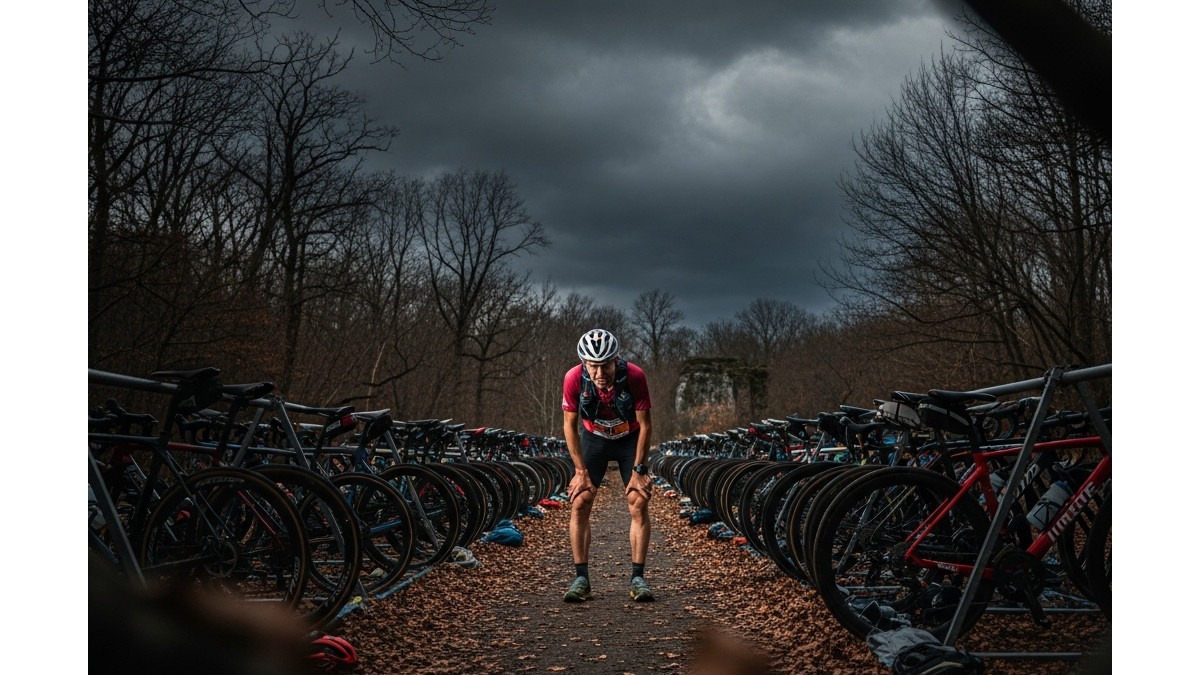
Hey trail friend! If you're here, it's likely because you've felt that strange sensation before. It's not the classic wall, the one where your legs are screaming and your glycogen stores are empty. No, this is something else. A mental fog, an overwhelming urge to sit down in the middle of the path and not move, even though your legs could still carry you. Your muscles say yes, but your head screams STOP. Welcome to the fascinating and daunting world of the sensory wall.
I remember a long-distance triathlon a few years ago. On the bike leg, after more than 5 hours on the saddle against a relentless headwind, it wasn't the pain in my thighs that almost made me crack. It was the noise. The constant whistling of the wind in my ears, the rubbing of my bib shorts, the clicking of the chain... My brain couldn't take it anymore. It was saturated, on the verge of short-circuiting. I experienced my first real sensory wall. That day, I understood that endurance wasn't just a physical matter. It's primarily a battle fought between the ears.
In this article, we're going to dive into the heart of this phenomenon together. We'll break down what happens in your head when it's bombarded with information for hours on end. We'll learn to recognize the early warning signs, identify the triggers, and most importantly, I'll share all my strategies, tested and approved on the field, to not only get past this wall but to smash right through it. Ready to train your brain? Let's go!
What Is the Sensory Wall? More Than Just Fatigue
To understand how to fight it, you first need to know what you're up against. The sensory wall is like the ghost of ultra-running. We talk about it less than the energy wall, but it's just as devastating, if not more so, because it's more insidious.
The Difference from the "Classic" Marathoner's Wall
The wall everyone knows is the energy wall. It's simple and brutal: you've run out of fuel (glycogen) in your muscles. It's like your car running out of gas. The solution is "simple": refuel, which means eating fast-acting sugars. It's a purely physiological and metabolic problem.
The sensory wall, however, is much more complex. It's a neurological phenomenon. Imagine your brain as a computer with limited random-access memory (RAM). Every piece of sensory information you perceive (the ground under your feet, the temperature, the wind, the pain, the light from your headlamp, the sound of your breathing...) uses a part of this RAM. After hours and hours of effort, the RAM is completely full. The computer overheats, slows down, and eventually crashes. Your brain isn't lacking energy (if you've fueled properly), but it's overloaded with information. It implements a protective mechanism, a circuit breaker, to avoid a total meltdown. This circuit breaker is the urge to stop, the loss of motivation, the feeling of detachment. That's the sensory wall.
The Brain: An Overworked Conductor
During an ultra-trail, your brain is the conductor of an incredibly complex symphony. It has to manage simultaneously:
- Motor skills: Coordinating each step, adjusting your balance on technical terrain.
- Thermoregulation: Maintaining your body temperature, whether you're under a blazing sun or in a freezing night.
- Effort management: Analyzing signals from your heart and lungs to maintain a sustainable pace.
- Nutrition and hydration: Reminding you to drink and eat even before the signals of thirst or hunger become critical.
- Pain processing: Receiving, interpreting, and often inhibiting the thousands of pain signals coming from muscles, joints, feet...
- Environmental analysis: Scanning the trail to avoid tripping, assessing distances, reading course markings.
- Emotional management: Handling fear, doubt, but also euphoria.
Each of these tasks consumes mental resources. And in an ultra, this mental load lasts for dozens of hours. The system isn't designed to operate at 100% capacity for that long. Exhaustion is therefore not just muscular; it is, above all, cerebral.
The Warning Signs: When Your Brain Speaks to You
The sensory wall doesn't just appear out of nowhere. It sends signals, little alerts that you must learn to listen to. If you notice any of these symptoms, your central processor might be starting to get saturated:
- Heightened irritability: The tiniest pebble in your shoe or the sound of your pack strap drives you crazy.
- Difficulty concentrating: You forget to eat, you struggle with simple calculations (like your split time to the next aid station), you start tripping often.
- Looping negative thoughts: You wonder what you're doing here, you focus on the pain, you imagine every possible scenario for dropping out.
- Feeling of disconnection: You feel like a spectator in your own race. You move on autopilot, without really being present. The beautiful landscapes have no effect on you anymore.
- Hypersensitivity or numbness: Either the slightest touch of your t-shirt on your skin becomes unbearable, or, on the contrary, you feel nothing, as if your body is numb.
- Mild hallucinations: Especially at night, you start seeing strange shapes in tree stumps or rocks. This is a clear sign that your brain is getting tired.
Recognizing these signs isn't an admission of weakness. It's the first step to taking action before the system crashes completely.
Sensory Wall Triggers: Identify the Enemy to Better Fight It
Now that we've defined the monster, let's see what feeds it. In an ultra, triggers are everywhere. Knowing them will allow you to anticipate them and prepare countermeasures. This is where we get to the heart of the matter!
Monotony: The Never-Ending Trail
Paradoxically, it's not always the difficulty that wears down the mind the most, but the lack of change. Your brain is a novelty-processing machine. When you feed it the same information on a loop for hours, it gets bored, tired, and eventually checks out.
The usual culprits are:
- Long forest roads: Kilometers of wide, straight trails where every turn looks like the last. At night, it's even worse.
- Interminable false flats, uphill or downhill: The effort is constant, the landscape changes little. Your mind has nothing new to analyze.
- Asphalt: Road sections, especially at the end of a race, are mental killers. The rhythm is regular, the ground is uniform... a true sensory nightmare.
During one race, I had a 10 km section of nearly flat trail in the middle of a forest, at night. At first, it's fine. But after 30 minutes, my brain started to go into sleep mode. Every step was identical. The only sound was my own breathing. That's when the negative thoughts started to flood in. My brain, lacking external stimuli, started feeding on itself, and it wasn't a pretty sight!
Sensory Overload: When Too Much Input Shuts You Down
This is the exact opposite of monotony, but the result is the same: saturation. Here, the brain is bombarded by an excess of stimuli, often negative, that it has to manage constantly.
- Incessant noise: The wind whistling in an 80 km/h gust, the sound of rain pounding on your hood, the "swish-swish" of your waterproof jacket with every movement, the "beep" of your watch every 5 minutes... These sounds, harmless at first, become a form of mental torture after 10 hours.
- Persistent pain: This isn't the sharp pain of a fall. It's the dull, nagging pain that never leaves you. The burn in your quads on a descent, the hotspot forming under your heel, the knot developing in your trapezius from your pack. Your brain expends a huge amount of energy trying to filter or endure this constant signal.
- Extreme weather conditions: Biting cold that forces you to tense all your muscles, freezing rain that seeps in everywhere, oppressive heat that makes you feel like you're suffocating... These are major sensory aggressions. Your brain is on high alert to maintain homeostasis, and this comes at the expense of everything else.
Sensory Deprivation: When Silence Becomes Deafening
The night in the mountains can be magical. But it can also be a terrifying sensory void. When you find yourself alone, in complete darkness, with the halo of your headlamp as your only horizon, your brain is deprived of most of the visual information it's used to processing.
It will try to fill this void. That's when the imagination takes over. The slightest crackle becomes a threatening animal. Shadows dance and transform. Your mind, instead of calming down, can race and loop on fears or anxieties. Solitude, if not tamed, can become an immense burden and hasten the arrival of the sensory wall.
The Night Factor: At Night, All Demons Are Gray
The night is a multiplier for all the preceding factors. Running at night goes against our circadian rhythm. Your body and brain are programmed to sleep. Fighting sleep requires considerable mental energy.
The reduced field of vision from the headlamp creates a "tunnel vision" effect. You only see what's right in front of you. It's exhausting for the eyes and for the brain, which must constantly reconstruct an image of the environment from partial information. This intense concentration, hour after hour, is one of the main causes of brain fatigue in ultras.
Strategies and Practical Gems to Smash Through the Sensory Wall
Okay, enough about the problem, let's move on to the solutions! The good news is that the sensory wall is not inevitable. With preparation and the right tricks up your sleeve, you can learn to manage it, and even come out stronger on the other side. Here are my practical gems, the ones I've collected over many kilometers.
1. Mental Training: Your Brain's Gym
We spend hours preparing our legs, but we often forget the most important muscle: the brain. A strong mind can be trained, just like the rest.
- Visualization: This is a super powerful tool. Before your race, take some time in a quiet place to visualize the difficult moments. Imagine yourself at night, in the rain, tired. But instead of just enduring it, visualize yourself applying a strategy: you put on your music, you eat a bar you love, you think of your loved ones. Visualize yourself overcoming the difficulty and finding pleasure again. On race day, when the situation arises, your brain will already have a positive "routine" to fall back on.
- Mindfulness meditation: You don't need to become a Buddhist monk! Just 5 to 10 minutes a day. Learn to focus on your breath, to observe your thoughts without judging them. This exercise teaches your brain not to get overwhelmed by the flow of information and emotions. During a race, this will help you take a step back from pain or negative thoughts.
- Create your mantras: Find one or more short, positive, and powerful phrases that resonate with you. Simple things like "I am stronger than this," "Every step brings me closer to the finish line," "I chose to be here." Repeat them over and over when things get tough. It might seem simplistic, but it's a remarkably effective self-anchoring technique to occupy your mind with positivity.
2. In-Race Sensory Management: Become Your Brain's DJ
During the event, you must actively manage what your brain perceives. Don't be passive, take action!
- Modulate sensory inputs: On a monotonous section, it's time to pull out your headphones. Prepare different playlists: one to boost you, a calmer one, or even podcasts or audiobooks. Be careful not to run for 20 hours with music on, as you'd create another form of saturation. Use it as a specific tool for specific moments. Conversely, if you're in a cacophony of wind and rain, taking a 2-minute break under some cover, taking off your hood, and just listening to the silence can be enough to "reboot" the system.
- The "body scan" technique: When you feel your mental state faltering, take 5 minutes to do a conscious body scan. Focus solely on the sensations in your left foot. Then your right foot. Your calf. Your thighs. Work your way up to your head. This reconnects you to your body in a controlled way and diverts your attention from pain or parasitic thoughts.
- "Chunking" the race: Never think about the 170 km you have left to run. That's the best way to get discouraged. Break your race down into tiny, ultra-concrete segments. Your only goal is to reach the next tree, then the next turn, then the next aid station. Celebrate each small victory. The brain handles a series of small tasks much better than an insurmountable mountain.
- Engage a different sense: This is my secret weapon! When your brain is saturated from noise or pain, give it a new and powerful piece of information through another channel. Pop a very sour lemon candy, an extra-strong mint lozenge, or chew a piece of spearmint gum. The intensity of the taste will create a sensory "reset" and pull you out of your stupor for a few precious minutes.
3. Gear: Your Allies Against Overload
We don't think about it enough, but good gear is a weapon against the sensory wall. Every little discomfort is a negative signal sent continuously to your brain. Eliminating these signals frees up bandwidth for what's essential: moving forward.
Comfort is king. A seam that rubs, a pack strap that digs in, a shoe that's too tight... After 15 hours, these details become tortures that undermine your mental state. Choose gear that you have tested and re-tested in training, in all conditions.
A crucial element is protection from the elements. Being soaked and cold is one of the worst sensory stressors. Good gear can create a protective bubble for you, a micro-climate that greatly relieves your brain from the task of thermoregulation.
⌚ EKOI Racing MTB Forest Poncho
🧾 Although designed for mountain biking, this poncho is a gem for the ultra-trailer who wants quick and effective protection against sudden downpours. It allows you to create an instant bubble of protection against wind and rain, two of the biggest sensory aggressors in the mountains. By cutting off these stimuli, you give your brain a break.
- Feature 1: Ultra-light and packable, you'll forget it's in your pack.
- Feature 2: Its loose fit allows you to wear it over your backpack, protecting all your gear in one single motion.
🎯 Ideal for: Long-distance trail runners looking for a minimalist and effective solution to manage rapid weather changes without long stops.
🛒 Discover the EKOI Racing MTB Forest Poncho on Ekoi4. Nutrition and Hydration: Fuel for the Brain
An underfed brain is a vulnerable brain. Hypoglycemia or dehydration, even mild, have a direct and immediate impact on your cognitive functions: concentration, decision-making, mood... A brain lacking fuel will be the first victim of sensory saturation.
Consistency is key. Don't wait until you're hungry or thirsty. Set an alarm on your watch and force yourself to take in some calories and a few sips of water every 20-30 minutes. This is somewhat related to Decision Fatigue in Ultra-Trail: When the Brain Gives Up Before the Legs, where every choice becomes a mountain. A well-fueled brain is more resilient, better able to make decisions and filter sensory information without getting overwhelmed.
Testimonials from Warriors: They've Faced the Wall and Conquered It
Because sharing experiences is at the heart of our passion, I've gathered testimonials from two trail-running friends. Their stories clearly show that we're all in the same boat when facing this wall.
Marie, TDS® finisher: "My worst moment was the second night. It was raining, it was cold, and we were on a long, windy ridge. The noise was infernal. I felt like my brain was going to explode. I almost quit 10 times. My salvation? I stopped for 5 minutes, sheltered by a rock. I put in my headphones with just one song, a lullaby I used to sing to my kids. It lasted 3 minutes. It cut out the sound of the chaos outside and reconnected me to something deeply positive. It was enough to get me going again, and 20 minutes later, the sun was rising and everything was better. It wasn't physical, it was 100% in my head."
Paul, passionate trail runner: "For me, the sensory wall is monotony. On an 80 km race with a long flat section in the forest, I started having very dark thoughts. I couldn't move forward anymore. At an aid station, a volunteer saw me struggling and just said: 'Change something.' At the time, I didn't get it. Then I took off my t-shirt and put on my arm sleeves. I changed my cap. I ate a piece of sausage when I had only been eating sweet things. These micro-changes broke the routine. The new sensation of the fabric on my arms, the salty taste... it was enough to wake up my brain. It's silly, but it saved my race."
Conclusion: The Wall Is a Doorway
As you've understood, the sensory wall is not an invincible enemy. It's an alarm signal, a message your brain sends you saying: "Hey, I'm overheating, help me out!". Ultra-trail is an exploration, not just of mountains, but also of your own mental limits.
Learning to manage this wall is developing a new skill, adding another string to your bow as an endurance athlete. It's accepting that performance isn't just measured in speed or elevation gain, but also in resilience, the ability to listen to yourself, and race intelligence.
So the next time you feel that fog creeping in on a trail, don't panic. Breathe. Take one step, then another. Pull one of these tricks out of your pocket. Remember that this wall is not an end in itself; it's just a doorway. A doorway that, once you pass through it, will lead you to an even stronger and more conscious version of yourself.
Now you have the keys to understand and anticipate this phenomenon. So, in training and on the trails, don't forget to take care of your number one muscle: your brain. The ball's in your court!
Your Questions About the Sensory Wall Answered
Is the sensory wall the same thing as overtraining?
No, they are two very different things. Overtraining is a state of chronic fatigue, both physiological and psychological, that develops over weeks or months due to an imbalance between training load and recovery. The sensory wall is an acute event, a neurological failure that occurs during a prolonged effort due to information saturation.
Can you experience the sensory wall on shorter distances?
Yes, absolutely. Although it is more common and more intense in ultra-trails, it can certainly occur during a marathon or even a long training run. Particularly difficult weather conditions (heatwave, windstorm), high mental stress, or significant prior fatigue can trigger sensory saturation even over shorter efforts.
Does experience help in managing this wall better?
Undeniably. Experience is the best weapon. A seasoned runner learns to recognize the very first signs of saturation and has an arsenal of personal strategies that they have tested and validated. They know when to put on music, when to take a break, what to eat to "wake up"... It's a skill that develops race after race. Every wall you overcome makes you stronger for the next one.
Can caffeine help push back the sensory wall?
It's a double-edged sword. Caffeine can indeed help by increasing alertness and temporarily masking brain fatigue. However, in some people or at too high a dose, it can also increase anxiety, heart rate, and sensory hypersensitivity, which can paradoxically worsen the situation. The golden rule is to never test it during a race. Try different doses in training to see how your body reacts and use it sparingly, like a trump card for truly critical moments.