

















Start My Coaching
Start My Coaching

Train effectively: methods, tips, and plans for running, trail running, and triathlon

Is There an Age Limit for Starting Triathlon? A Complete Guide to Training for All Ages

Is There an Age Limit for Starting Triathlon? A Complete Guide to Training for All Ages

Training

Understanding the Age Factor in Triathlon Training Triathlon is a challenging yet rewarding endurance sport that comb...

23/10/2025

Train Your Gut: Key Concepts and Methods for Endurance Athletes

Train Your Gut: Key Concepts and Methods for Endurance Athletes

Performance

Understanding the Importance of Gut Training Endurance athletes, whether they are triathletes, cyclists, runners, or...

20/10/2025

Train Safely and Effectively in Hot Weather for Endurance Athletes

Train Safely and Effectively in Hot Weather for Endurance Athletes

Training

Understanding Hot Weather Training As endurance athletes, whether you are a triathlete, trail runner, cyclist, or inv...

20/10/2025

Enhance Your Performance with Mobility Exercises for Endurance Sports

Enhance Your Performance with Mobility Exercises for Endurance Sports

Performance

Understanding Mobility in Endurance Training For endurance athletes such as triathletes, trail runners, swimmers, cyc...

19/10/2025

Unlocking the Benefits of Altitude Training for Endurance Athletes

Unlocking the Benefits of Altitude Training for Endurance Athletes

Performance

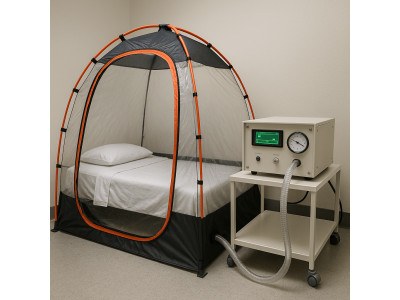
Understanding Altitude Training Altitude training is a method used by endurance athletes to improve their performance...

19/10/2025

Top Breathing Techniques for Triathletes: Enhance Your Performance

Top Breathing Techniques for Triathletes: Enhance Your Performance

Performance

Understanding Breathing for Endurance Athletes For triathletes, mastering breathing isn't merely a supportive functio...

18/10/2025

Seasonal Adjustments for Triathlon and Trail Training Optimization

Seasonal Adjustments for Triathlon and Trail Training Optimization

Training

Understanding the Importance of Seasonal Training For endurance athletes, training is not a one-size-fits-all approac...

18/10/2025

Smiling During Exercise: Enhance Your Triathlon and Trail Running Performance

Smiling During Exercise: Enhance Your Triathlon and Trail Running Performance

Performance

The Surprising Power of a Smile As endurance athletes, we often focus on physical training, nutrition, and recovery....

18/10/2025

Incorporating Active Recovery into Your Triathlon and Trail Training

Incorporating Active Recovery into Your Triathlon and Trail Training

Recovery

Understanding Active Recovery Active recovery refers to low-intensity exercise performed after strenuous physical act...

17/10/2025

Exploring Polarized vs Pyramidal Training Methods in Triathlon

Exploring Polarized vs Pyramidal Training Methods in Triathlon

Training

Understanding Polarized Training Polarized training is a method that divides workouts into 3 zones: low intensity, mo...

16/10/2025

Running Rules: Enhance Your Schedule for Better Workouts

Running Rules: Enhance Your Schedule for Better Workouts

Performance

Understanding Your Training Needs For endurance athletes, particularly runners, achieving peak performance is not mer...

13/10/2025

Understanding Maximum Heart Rate for Runners and Endurance Athletes

Understanding Maximum Heart Rate for Runners and Endurance Athletes

Training

What is Maximum Heart Rate (MHR)? For runners and endurance athletes, understanding their Maximum Heart Rate (MHR) is...

11/10/2025

Parent Training: Organizing Your Schedule to Combat Fatigue

Parent Training: Organizing Your Schedule to Combat Fatigue

Fatigue

Parent Training: An Organizational Matter, Not a Sacrifice As an athlete navigating the challenges of training while...

10/10/2025

24-Week Training Plan for 100km with 6100m Elevation Gain

24-Week Training Plan for 100km with 6100m Elevation Gain

Training

Overview of the 24-Week CCC Training Plan Are you ready to tackle the challenge of a 100km trail running race with ov...

07/10/2025

Top Mental Preparation Strategies for Endurance Athletes

Top Mental Preparation Strategies for Endurance Athletes

Performance

Understanding the Importance of Mental Preparation For endurance athletes like triathletes, trail runners, swimmers,...

05/10/2025

Explore Urban Trail Running Benefits and Optimize Your Training

Explore Urban Trail Running Benefits and Optimize Your Training

Training

Discover the Benefits of Urban Trail Running Urban trail running is a dynamic way to experience the thrill of nature...

04/10/2025

No Time? The Power of Short Workouts for Busy Parents

No Time? The Power of Short Workouts for Busy Parents

Training

๐Ÿ’ช Embracing Short Workouts: A Must for Busy Parents If you're a parent, juggling between work, children, and personal...

23/09/2025

Returning to Trail Running Post-Pregnancy: 5 Mistakes to Avoid for a Smooth Comeback

Returning to Trail Running Post-Pregnancy: 5 Mistakes to Avoid for a Smooth Comeback

Recovery

๐Ÿƒโ€โ™€๏ธ Returning to Trail Running Post-Pregnancy: 5 Mistakes to Avoid The journey back to trail running after giving birth...

22/09/2025

๐Ÿ“ Why follow a structured training plan?

Whether you're preparing for a 10 km, an ultra-trail, or a triathlon, endurance is at the heart of your effort. But to progress without getting injured and to achieve your goals, simply accumulating kilometers is not enough. A structured training plan allows you to:

  • โœ… Improve your endurance and speed
  • โœ… Prevent injuries and excessive fatigue
  • โœ… Better manage effort and optimize your recovery
  • โœ… Avoid monotony and stay motivated

๐Ÿ“… What weekly organization should I adopt?

The number of sessions and their content depend on your **level**, your **goal**, and the time you have available. The key is **consistency**, not accumulation. Here are some benchmarks to guide you:

  • **Beginner:** 2 to 3 sessions per week (fundamental endurance, quality session, strength training).
  • **Intermediate level:** 3 to 5 sessions per week, including specific sessions and strength training.
  • **Advanced level:** 5 to 7 sessions or more, with an emphasis on training load, progression cycles, and recovery.

A good training plan adapts to your life, not the other way around. 4 well-planned sessions are better than 7 poorly distributed ones.

๐Ÿ” The main principles for effective progression

Whatever your sport, a good training plan is based on simple but essential principles:

  • ๐Ÿ“ˆ **Progressiveness:** gradually increase the workload (volume or intensity) from one week to the next.
  • โš–๏ธ **Balance:** alternate intense sessions with easier sessions to promote recovery.
  • ๐Ÿ”ฌ **Specificity:** work on the qualities specific to your goal (race pace, hill work, flat speed, etc.).
  • ๐Ÿ’ช **Strength training:** one to two sessions of core work and general physical preparation per week are essential to prevent injuries and improve the efficiency of your stride.

๐Ÿ“ Adapting training according to your discipline and distance

Although the principles are universal, each sport and each distance has its own specifics:

๐Ÿƒ Running & Trail Running

Training is generally based on three types of sessions:

  • **Long runs:** to develop your fundamental endurance.
  • **Quality sessions:** working at your race pace, intervals, threshold work.
  • **Strength training:** GPP, core work to strengthen the body and improve your posture.

In **trail running**, add specific work on ascents/descents and the use of poles.

๐ŸŠโ€โ™‚๏ธ๐Ÿšดโ€โ™‚๏ธ๐Ÿƒ Triathlon

Triathlon requires a unique approach to combine the three disciplines:

  • **Cross-training:** alternate sports during the week to avoid monotony and the risk of injury.
  • **Combined sessions:** "brick sessions" (cycling followed by running) are essential to accustom your body to the transition.
  • **Technique:** swimming and cycling technique are just as important as training volume.

๐Ÿ“Š Training plans adapted to all profiles

There are many ready-to-use training plans, designed according to your level and constraints. A good plan offers you structure and follow-up. On our platform, you can find:

  • ๐Ÿ“… Detailed **weekly plans** with specific sessions
  • ๐ŸŽฏ **Progressive goals** to improve your endurance, speed, and strength
  • ๐Ÿ“˜ **Related advice** on nutrition, mental preparation, and recovery

View all our training plans

๐Ÿง  FAQ โ€“ Training for running, trail running, and triathlon

โ“ How long does it take to prepare for a race?

For a 10 km or a Sprint triathlon, plan for 6 to 8 weeks. For a half marathon or an M triathlon, 12 to 16 weeks. For a marathon or an ultra-trail, count on 4 to 6 months depending on your starting level.

โ“ Should I do strength training and core work?

Yes, it's essential. One to two strength training sessions per week (core work, squats, lunges, etc.) help stabilize your body, improve your posture, and prevent injuries. This will make your stride more efficient and help you better handle the training load.

โ“ How to avoid overtraining?

Overtraining is the result of an imbalance between workload and recovery. To avoid it, follow a progressive plan, schedule a light week every 3 or 4 weeks, and pay attention to your body's signals (fatigue, decrease in performance, sleep problems, irritability).

โ“ At what intensity should I train?

The majority of your training (about 80%) should be at a low intensity (fundamental endurance), meaning a pace where you can talk without being out of breath. The remaining 20% is dedicated to high-intensity sessions (intervals, threshold work) to improve your speed and power.

โ“ Do I have to train every day?

No. Rest days are just as important as training days. It is during the rest phases that the body repairs itself and adapts to the training load. Listen to your body and don't feel guilty about taking a day off when you need it.

โ“ Is cross-training useful?

Absolutely. Cross-training (cycling, swimming, etc.) allows you to work on your endurance without subjecting your joints to the repeated impacts of running. They are excellent for active recovery and the development of your cardiovascular capacity.